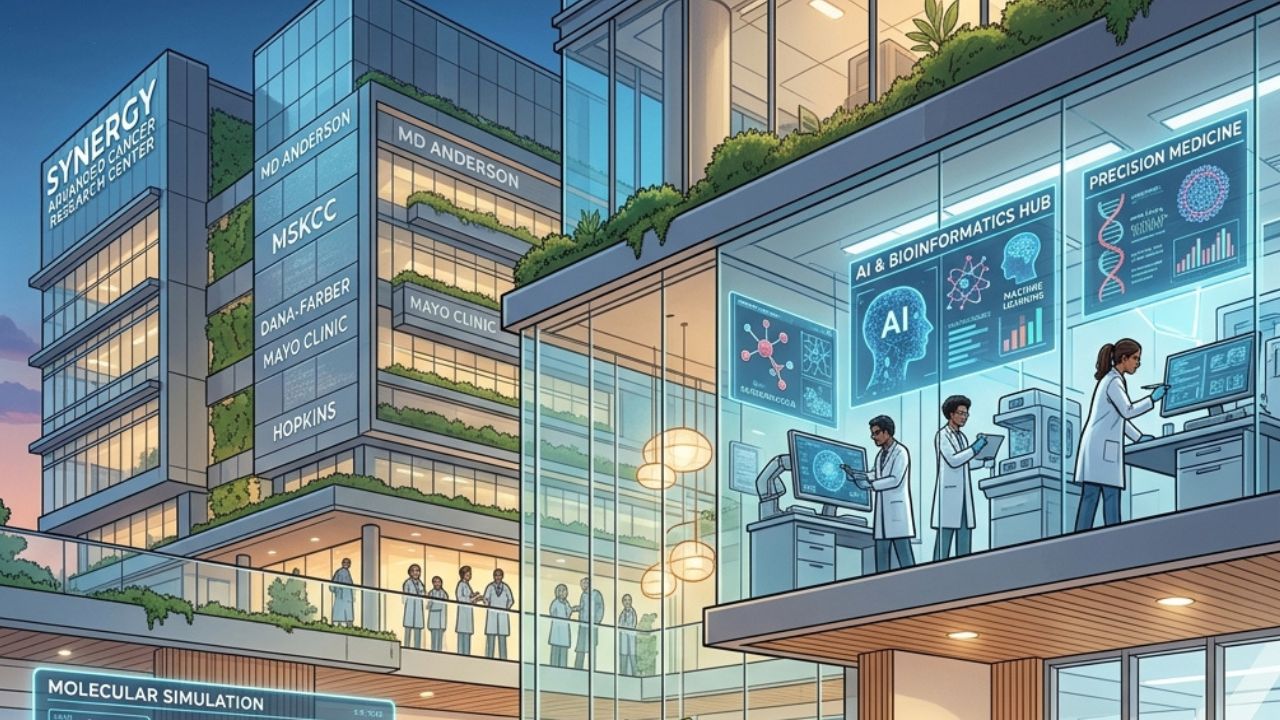
The top hospitals for advanced cancer research trials in the USA include the MD Anderson Cancer Center, Memorial Sloan Kettering Cancer Center, Dana-Farber Cancer Institute, Mayo Clinic, and Johns Hopkins Kimmel Cancer Center. These institutions lead the nation in clinical trial volume, innovative research funding, and patient-centered, multidisciplinary oncology care.
A cancer diagnosis fundamentally changes a person’s life, bringing an immediate need for effective, reliable treatment options. While standard treatments work well for many patients, others require new approaches to combat aggressive or rare forms of the disease. This is exactly where advanced cancer research trials step in to bridge the gap between current medical limitations and future cures.
Clinical trials represent the driving force behind every major breakthrough in oncology. Without these carefully monitored studies, the medical community would not have access to life-saving therapies like targeted gene inhibitors or immune-boosting drugs. For patients, participating in a clinical trial offers access to cutting-edge treatments years before they become widely available to the general public.
The United States is home to a robust network of research institutions dedicated to eradicating cancer. Supported by billions of dollars in federal and private funding, these hospitals continuously push the boundaries of medical science. Navigating this vast landscape can feel overwhelming for patients and their families. Understanding which institutions lead the way in research can help patients make informed, confident decisions about their healthcare journey.
What are advanced cancer clinical trials and how do they work?
Advanced cancer clinical trials are carefully designed research studies that test new medical approaches in human volunteers. These studies aim to determine if a new treatment is safe, effective, and potentially better than the current standard of care. Treatments tested in these trials include new drugs, surgical techniques, radiation therapies, or combinations of these methods.
What are the different phases of cancer clinical trials?
Clinical trials operate in a strict series of steps called phases. Each phase serves a specific purpose in evaluating a new treatment.
- Phase 1 trials: These initial studies focus primarily on safety. Researchers test a new treatment on a small group of patients (usually 15 to 30) to find the safest dose and identify any side effects.
- Phase 2 trials: Once researchers confirm the treatment’s safety, Phase 2 trials evaluate its effectiveness. These studies involve slightly larger groups (often up to 100 people) who have a specific type of cancer.
- Phase 3 trials: These trials compare the new treatment directly against the current standard of care. Phase 3 trials involve hundreds or even thousands of patients across multiple hospitals to definitively prove if the new therapy is superior.
- Phase 4 trials: After the FDA approves a treatment, Phase 4 trials track its long-term safety and effectiveness in the general population.
Who is eligible to participate in a clinical trial?
Every clinical trial has strict guidelines detailing who can and cannot participate. These guidelines are known as eligibility criteria. Researchers base these criteria on factors like age, gender, the type and stage of cancer, previous treatment history, and overall medical condition. These rules ensure patient safety and guarantee that researchers can accurately interpret the study’s results.
How do we identify the best cancer research hospitals?
Not all hospitals offer the same level of research capabilities. The National Cancer Institute (NCI) designates certain facilities as “Comprehensive Cancer Centers” based on their scientific leadership. When identifying the top hospitals for clinical trials, we look at several defining factors.
Research funding and grant support
Top-tier research hospitals receive substantial funding from the National Institutes of Health (NIH), the NCI, and private foundations. High levels of funding allow these institutions to conduct expansive, high-risk, high-reward studies that smaller facilities simply cannot afford.
Publication records and scientific impact
Leading hospitals regularly publish their findings in prestigious, peer-reviewed medical journals. A strong publication record indicates that a hospital’s researchers are actively contributing valuable knowledge to the global medical community.
Multidisciplinary approaches to cancer care
The best research centers do not rely on a single specialist. Instead, they use a multidisciplinary approach where medical oncologists, surgeons, radiation therapists, and geneticists collaborate to design the best treatment plan for each individual patient.
Cutting-edge technology and research facilities
Advanced trials require advanced technology. Leading hospitals house state-of-the-art laboratories, high-resolution imaging equipment, and genomic sequencing centers that allow researchers to study cancer at a molecular level.
Which are the top hospitals for advanced cancer research in the USA?
Several institutions consistently rank at the top of national lists for oncology research and clinical trial availability. Here is a detailed look at the leading centers shaping the future of cancer care.
MD Anderson Cancer Center (Houston, TX)
The University of Texas MD Anderson Cancer Center consistently ranks as the number one hospital for cancer care in the United States. MD Anderson conducts one of the largest clinical trial programs in the world, exploring treatments for almost every known type of cancer.
Researchers at MD Anderson have made significant breakthroughs in targeted therapies, designing drugs that specifically attack the genetic mutations driving tumor growth. The hospital also offers robust patient resources, including dedicated clinical trial coordinators who help patients navigate the complex enrollment process.
Memorial Sloan Kettering Cancer Center (New York, NY)
Memorial Sloan Kettering Cancer Center (MSKCC) is the world’s oldest and largest private cancer center. MSKCC is globally recognized for its focus on precision medicine. By sequencing the DNA of a patient’s tumor, MSKCC researchers can match patients with highly specific Phase 1 and Phase 2 clinical trials tailored to their unique genetic profile.
MSKCC also pioneers collaborative research initiatives, frequently partnering with pharmaceutical companies and other academic institutions to accelerate drug development.
Dana-Farber Cancer Institute (Boston, MA)
As a principal teaching affiliate of Harvard Medical School, the Dana-Farber Cancer Institute blends rigorous academic research with compassionate clinical care. Dana-Farber stands out for its equal dedication to both adult and pediatric oncology research.
The institute is heavily involved in global collaborative research, sharing genomic data with institutions worldwide to better understand rare cancers. Dana-Farber researchers have played instrumental roles in developing modern CAR T-cell therapies, a revolutionary treatment that engineers a patient’s own immune cells to fight leukemia and lymphoma.
Mayo Clinic Cancer Center (Rochester, MN)
The Mayo Clinic operates a uniquely integrated model of care. While its primary campus is in Rochester, the Mayo Clinic Cancer Center spans facilities in Arizona and Florida, allowing it to reach a diverse patient population.
The Mayo Clinic excels in developing individualized medicine trials and is renowned for its rural outreach programs. By expanding access to clinical trials across broader geographic regions, the Mayo Clinic ensures that cutting-edge therapies are not limited strictly to major metropolitan areas.
Johns Hopkins Kimmel Cancer Center (Baltimore, MD)
The Johns Hopkins Kimmel Cancer Center holds a legendary place in medical history. Researchers at this institution mapped the first cancer genome, fundamentally altering how the medical world understands the disease.
Today, Johns Hopkins is a premier destination for immunotherapy research. The center investigates how to “uncloak” cancer cells so the body’s natural immune system can identify and destroy them. Johns Hopkins also places a strong emphasis on community education and cancer prevention trials within the greater Baltimore area.
What are the emerging trends in cancer research today?
The landscape of oncology is shifting rapidly. The trials currently taking place at the aforementioned top hospitals are focused heavily on a few key emerging technologies.
How is immunotherapy changing cancer treatment?
Immunotherapy has transformed oncology from a field focused purely on radiation and chemotherapy to one that harnesses the human immune system. Current trials are exploring combinations of immune checkpoint inhibitors to treat solid tumors in the lungs, skin, and kidneys with unprecedented success rates.
What role does gene editing and CRISPR play?
CRISPR technology allows scientists to edit DNA with incredible precision. In cancer research, clinical trials are using CRISPR to modify immune cells outside the body, making them hyper-aggressive against specific cancer markers before reintroducing them into the patient.
How are liquid biopsies enabling early detection?
Traditionally, diagnosing cancer required invasive tissue biopsies. Researchers are now perfecting liquid biopsies, which detect microscopic fragments of tumor DNA floating in a routine blood draw. Clinical trials are currently validating liquid biopsies as a tool for catching cancer in its earliest, most curable stages.
How are AI and machine learning applied in oncology?
Artificial intelligence is helping oncologists process massive amounts of patient data. AI models can analyze thousands of medical images to detect tumors invisible to the human eye. Furthermore, machine learning algorithms are being used to predict how specific tumors will respond to particular experimental drugs, optimizing the clinical trial selection process.
How can patients choose the right hospital and clinical trial?
Finding the right clinical trial requires careful consideration and planning. Patients should select a trial based on their specific cancer subtype, overall health, and personal priorities.
Consulting with oncologists and specialists
Your primary oncologist is your best advocate. Discuss your interest in clinical trials early in your treatment process. Specialists can review your medical history and recommend trials that offer the highest potential benefit based on your tumor’s genetic makeup.
Utilizing online resources and trial databases
Patients can take an active role in their care by searching centralized databases. The National Institutes of Health manages ClinicalTrials.gov, a comprehensive registry of federally and privately supported clinical trials. Patients can filter studies by disease, location, and phase.
Considering logistics, support, and quality of life
Participating in a clinical trial often requires frequent hospital visits, extensive testing, and strict monitoring. Choose a local NCI-designated center if travel logistics present a major barrier to your quality of life. Conversely, opt to travel to a major hub like MD Anderson or MSKCC if you have a highly rare cancer that requires hyper-specialized Phase 1 trials. Always weigh the potential medical benefits against the physical and financial demands of travel and time away from home.
The Future of Cancer Care
The pursuit of a cure for cancer is a massive, highly coordinated enterprise. The top hospitals for advanced cancer research trials in the USA are driving this effort, leveraging brilliant medical minds and billions in funding to rewrite the rules of oncology.
For patients, participating in a clinical trial is a profound act of self-advocacy and a vital contribution to medical science. The treatments discovered today will save the lives of millions tomorrow. If you or a loved one are facing a cancer diagnosis, speak with your healthcare team about the possibility of joining a clinical trial. The future of cancer treatment is brighter than ever, and it is being shaped right now in research hospitals across the country.
Frequently Asked Questions (FAQ)
How much does it cost to participate in a cancer clinical trial?
In most cases, the trial sponsor covers the cost of the experimental drug or treatment. Routine medical care costs associated with the trial (like standard blood tests and doctor visits) are typically billed to the patient’s health insurance. You should always consult with the hospital’s financial coordinator before enrolling.
How long do advanced cancer clinical trials typically last?
The duration depends entirely on the study’s design and phase. Phase 1 trials may only last a few months to verify safety, while Phase 3 and Phase 4 trials can monitor patients for several years to track long-term survival rates and late-onset side effects.
What are the risks of joining an experimental cancer trial?
The primary risks include experiencing unpredictable side effects and the possibility that the experimental treatment may not be more effective than the standard care. However, trial protocols undergo rigorous ethical review by an Institutional Review Board (IRB) to maximize patient safety.
Can I leave a clinical trial once I have enrolled?
Yes. Participation in any clinical trial is entirely voluntary. You can withdraw your consent and leave the study at any time, for any reason, without it negatively affecting your access to standard medical care at the hospital.
Are there alternatives if I don’t qualify for a top hospital’s clinical trial?
If you do not meet the strict eligibility criteria for a specific trial, ask your oncologist about “compassionate use” or “expanded access” programs. These programs sometimes allow patients with life-threatening conditions to access experimental therapies outside of a formal clinical trial setting.